Fall Streamer Fishing 101: Chasing Pre-Spawn Browns on the Fryingpan and Roaring Fork
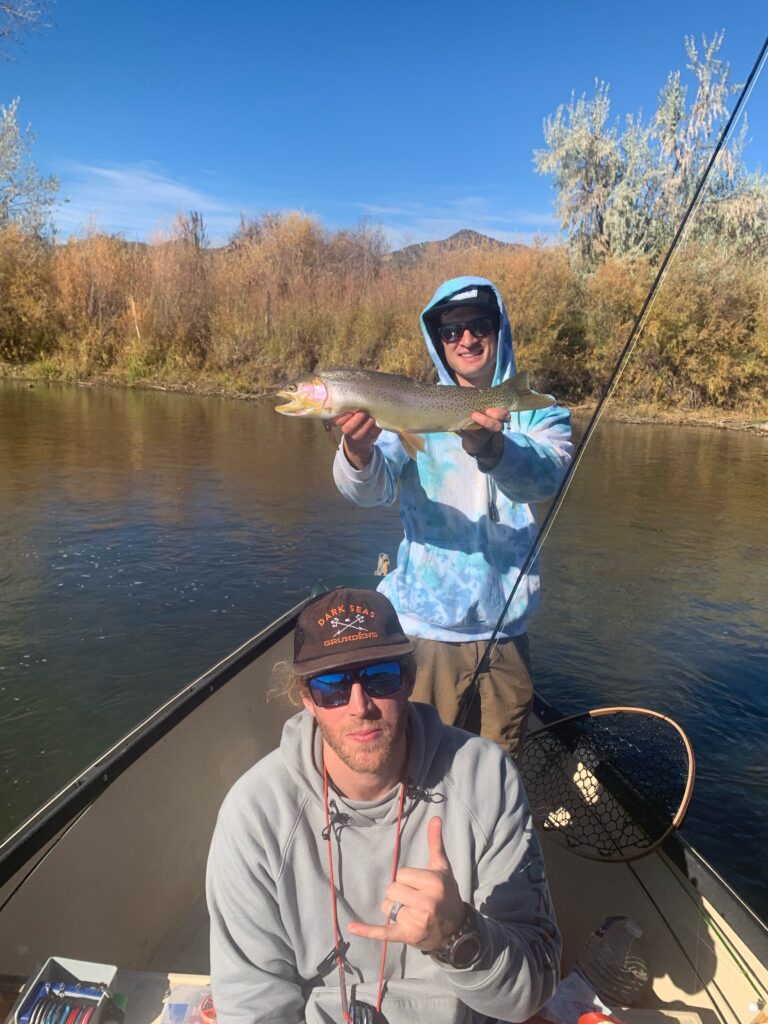
There’s a shift that happens on the Fryingpan and Roaring Fork every fall, and if you’re not paying attention, you’ll miss it entirely. The dry-fly bite that carried you through summer starts to fade. The water cools. And somewhere in that transition, brown trout stop thinking about mayflies and start thinking about one thing: the spawn coming in a few weeks. That shift is exactly why fall is streamer season on these rivers, and it’s when you have the best shot all year at the biggest brown in the pool. Why Pre-Spawn Browns Turn Aggressive Why do brown trout get so much more aggressive before the spawn? Brown trout get territorial and aggressive as they stage for the spawn, it’s their Super Bowl, and they don’t want to lose. The big browns that spent all summer sipping bugs in a lazy feeding lane start holding tighter to structure, guarding water, and reacting to anything that looks like a threat or a competitor. That’s the whole game with streamers: you’re not imitating food so much as you’re triggering instinct. A big streamer swung through a brown’s territory doesn’t get ignored the way a size-18 midge might. It gets attacked. This is why fall streamer fishing produces some of the biggest fish of the year. You’re not fishing to the average trout in the run. You’re fishing to the one that’s decided this water is his, and he’s not going to let something swim through it unchallenged. Reading the Fryingpan and Roaring Fork This Time of Year How differently do these two rivers fish once fall sets in? Both rivers fish differently once fall sets in. The Fryingpan runs cold and clear out of Ruedi Reservoir, and its browns tend to hold tight to structure, logs, boulders, deep slots along the bank. That clarity often lets you see a fish track a streamer, which is as good as it gets for building confidence in your presentation. The Roaring Fork is bigger water with more variety: braided channels, deeper runs, more room for fish to spread out. You’re covering more water on the Fork. That usually means you take a slightly different approach: more searching, more repositioning, less precision-casting to one visible target. On both rivers, look for structure that gives a big brown cover and an ambush point: undercut banks, current seams, the transition where fast water dumps into a slower pool. That’s where pre-spawn fish set up shop. This is also exactly the kind of water that changes week to week, which is where a guide who’s on it daily earns his keep, he knows which bank is holding fish this week, not last week. Streamer Tactics That Work What actually triggers a strike from a pre-spawn brown? Swing and strip with intent. A dead-drifted streamer rarely triggers the same response as one moving with purpose across a fish’s window. Vary your retrieve. Some days it’s a slow strip with long pauses. Other days a fired-up brown wants an erratic, fast retrieve he has to chase down. Change it up until you find what’s working. Fish the banks hard. Big pre-spawn browns hold tight to cover more than they hold in the middle of the river this time of year. Don’t be afraid to go big. Fall is the time of year when a bigger, bulkier streamer often outperforms something subtle, you’re trying to get noticed, not sneak past. Timing It Right When exactly is the streamer bite at its best? The window matters. Fish too early in the fall and browns are still spread out and feeding normally, not yet keyed into spawning behavior. Fish too late, once fish are actively on their beds, and you’re better off leaving them alone entirely, walking through active spawning water does real damage to the fishery. The sweet spot is that stretch of weeks when fish are staging and aggressive, but not yet paired up and digging redds. That’s when the streamer bite is at its best, and it’s worth timing a trip around. This is also exactly the kind of window that’s easy to miss if you’re not fishing these rivers regularly. A guide who’s out here every day knows precisely when that pre-spawn aggression peaks, which banks are holding fish, and when it’s time to back off and let the fish do their thing undisturbed. Fall streamer fishing on the Fryingpan and Roaring Fork isn’t about numbers. It’s about giving yourself a shot at the one big fish that’s decided to stop tolerating anything swimming through his water. Get the timing right, fish the banks with intent, and be ready, because when a pre-spawn brown commits to a streamer, there’s no mistaking it. If you want to make sure you’re hitting that window right and fishing water that’s actually holding fish instead of guessing, booking a day with Gone Fishing Colorado is one of the best moves you can make this time of year. Our guides live and breathe these rivers, and we’re out here every day of the season.
Why September Is the Best-Kept Secret for Roaring Fork Valley Fly Fishing
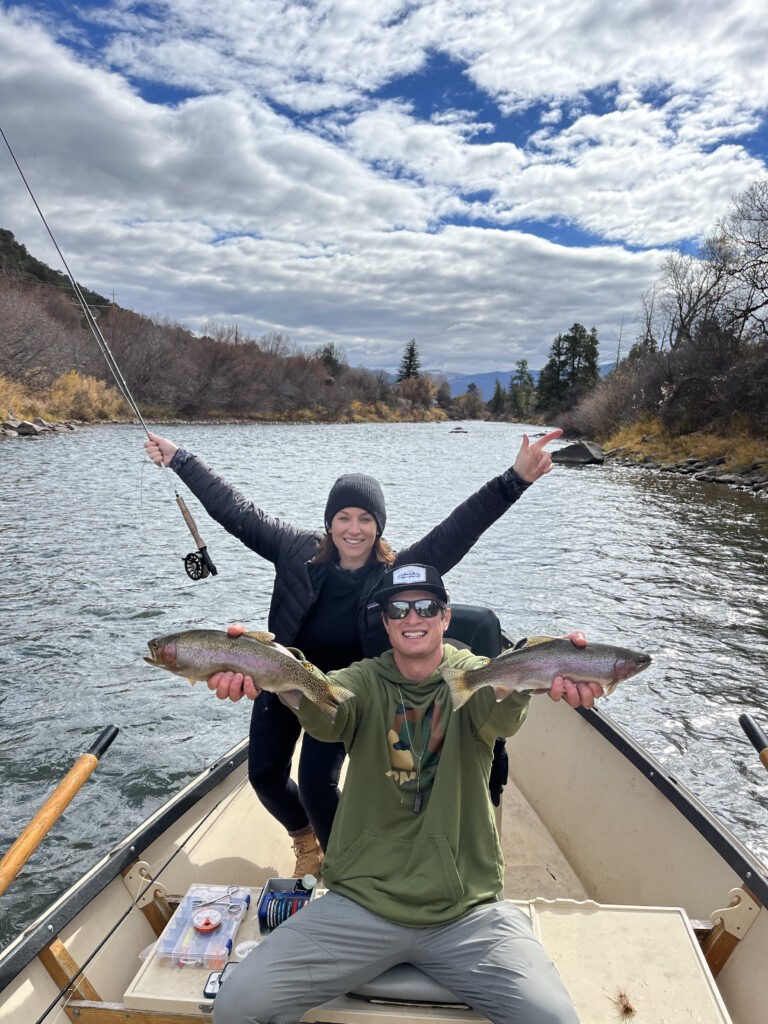
Drive the valley in July, and you’re fighting for a parking spot at the boat ramp like it’s Black Friday. Show up in late September, and you might actually have the run to yourself. Same river. Same fish. A fraction of the circus. That is not an accident, it’s the payoff of September fly fishing on this water. The BWO Hatch Doesn’t Quit, It Just Waits for the Heat to Leave Why does the blue-winged olive hatch come roaring back in September? Blue-winged olives are cold-water bugs. They hatch hardest when water temps sit in the 45 to 55°F sweet spot, which is why they show up hard in spring, ghost you through the July and August bake, and then come roaring back once nights start cooling and days shorten. By September, both the Fryingpan and the Roaring Fork are sliding right back into that window. The Ruedi Reservoir dumps cold water year-round, so the tailwater stays in the olive zone even while the rest of Colorado waters are still dealing with summer temps. September starts to cooperate with more stable temps. Then throw in more overcast, drizzly days, the exact conditions that turn sparse olive hatches into thick ones. As a freestone system, the Roaring Fork runs warmer and busier in summer. By September, it cools into the same range, and olives start showing on the soft edges and back-eddies where dry-fly action had gone quiet in August. Crowds Evaporate Right When the Fishing Gets Interesting Why does the water actually fish better once summer tourists leave? Labor Day is the unofficial closing bell for peak tourist season. Rafting outfits wind down, second-home owners head back to wherever they came from, and the boat ramps and wade access that were standing-room-only in July suddenly open up. You’re not fighting for water. You’re not watching a raft blow through the exact run you were about to fish. That matters more than it should. Pressured trout in gin-clear Fryingpan water get selective and spooky fast. Less traffic means fish sit in more predictable lies, spook less when you approach, and start acting like the fish in those optimistic May reports instead of the hyper-educated summer versions. Browns Are Already Shifting Gears What early signs of the spawn show up in September? Full-on brown trout spawn is more of an October to November thing here, but the behavioral change starts earlier. As water cools, the bigger, more territorial fish begin feeding harder to build reserves and start pushing out of summer holding water into the deeper runs and current seams they’ll use once spawning ramps up. You won’t see full pre-spawn aggression yet, but you’ll notice more large browns showing themselves in daylight and takes that feel a little more deliberate than a summer sip. Cooling water brings back a hatch that forces you to actually get good at dry-fly fishing. The summer crowds that turn this place into a compromise have mostly left. And the biggest fish in the system are starting to move in ways that reward people who show up and pay attention. September doesn’t get the same hype as July and August. On the Fryingpan and the Roaring Fork, it’s arguably the more interesting month to be on the water, and Gone Fishing Colorado can put you on it with a lot less company. Reach out to book your September trip.
4 Reasons a Guided Trip with Gone Fishing Colorado Is Worth It
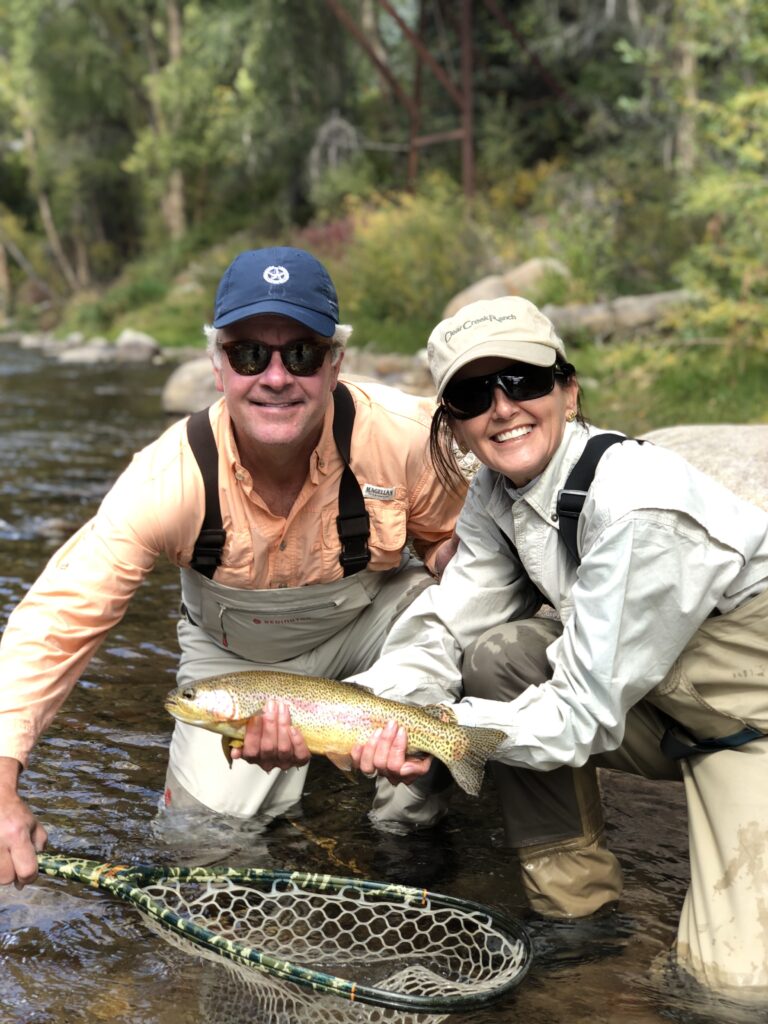
There’s a certain type of angler who hears “guided trip” and hears “training wheels.” Something you use until you know better, then leave behind. Fish the Roaring Fork Valley for a day, and that idea doesn’t survive the morning. This isn’t water you figure out by driving up and picking a pull-off. It’s technical, it’s seasonal, and the fish here have seen enough bad drifts to know the difference. The gap between a day you’ll talk about for years and one you’d rather forget usually comes down to who’s standing next to you in the river. Here’s what you’re actually paying for when you book a guided fly fishing trip with Gone Fishing Colorado. 1. Local Knowledge You Can’t Get From a Report Why does knowing this water week to week matter so much? The Roaring Fork, the Fryingpan, and the Crystal River don’t fish the same way two weeks in a row. Runoff, hatch timing, water temp, all of it shifts constantly, and the fish move with it. A guide who’s on this water day after day, season after season, knows where the trout are holding this week, not where a fishing report said they were holding last week. That kind of knowledge doesn’t live on a hatch chart. It lives in the guide walking the bank with you, and there’s no shortcut to it besides fishing alongside one. 2. A Faster Learning Curve on Technical Water What makes the Fryingpan such a demanding river to fish? The Fryingpan in particular has earned its reputation. These are educated trout on clear, slow-moving water, and getting one to eat takes more than a decent cast. It takes reading the seam, matching a hatch that might change three times in an afternoon, and managing a drift that can’t have a hint of drag. A guide is coaching you through every bit of that in real time, cast by cast. You’ll make more good decisions in a single day on the water with someone correcting you than you would over a full season of guessing on your own, because the mistakes get fixed while they still matter. 3. More Time Fishing, Less Time Guessing How much of the day disappears into logistics on unfamiliar water? Fish unfamiliar water solo and watch how much of the day disappears into logistics. Where’s the access point? Is this run even worth working? Did I already spook the pool upstream, wading in the wrong spot? A guide has already worked through all of that before you ever rig up. That means your fly’s in the water instead of your head being stuck on decisions that have nothing to do with fishing. On rivers that change as often as these do, that’s the difference between a handful of good drifts and a day where you’re genuinely fishing the whole time. 4. A Better Shot at the Fish You Actually Came For What does a guide actually put in your favor out there? This is the one that matters most. Whether you’re after your first trout on a dry fly or trying to find the technical water the Fryingpan is known for, a guide knows how to build the day around what’s actually happening on the river, not just where you happened to park. That’s not something you back into. It’s the product of a guide spotting fish and reading water before you’d have noticed either, and years on this specific stretch, putting you in position before the window closes. You can fish the Roaring Fork Valley on your own if you want. Just know you’ll be leaving a good chunk of the river, and a good chunk of your own progress as an angler, on the bank. A day with Gone Fishing Colorado isn’t about being handed fish. It’s about getting put in position to find, read, and fool trout that would be next to impossible to crack on your own. Book your guided trip at gonefishingcolorado.com, or call 970-948-4663.
Your Guide to Your First Guided Fly Fishing Trip with Gone Fishing Colorado
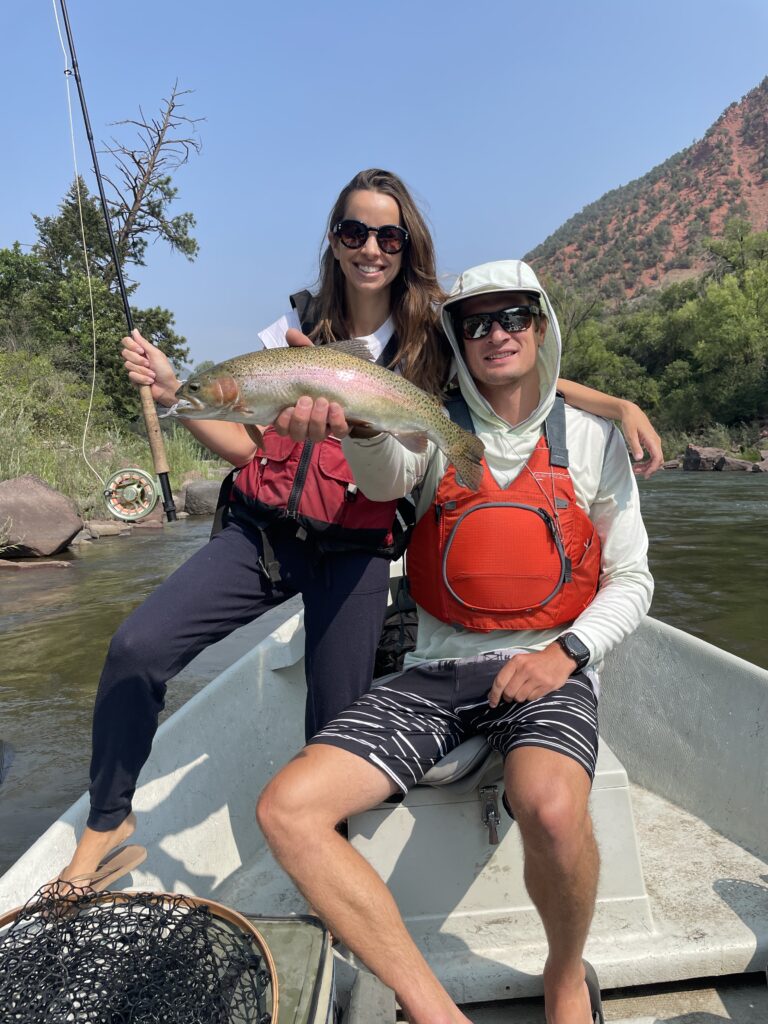
The Roaring Fork Valley has a way of making you feel like you should already know how to fly fish. Aspen sits up the road. The water runs clear over the cobble, and you can see fifteen feet down. The trout are wild, well-fed, and not in the mood to be fooled by a sloppy drift. None of that means you’re not ready for a guided fly fishing trip. It just means you should fish it with someone who already knows it. Gone Fishing Colorado has spent more than a decade guiding the Roaring Fork, the Fryingpan, and the Crystal River out of Basalt. These aren’t guides who learned the water for a season and moved on. They fish these rivers on their days off, which is a different kind of knowledge than the kind you get from a map or a hatch chart. That’s what you’re paying for on a guided day, and it shows up in how many fish you actually see. Most people picture a guided trip as something formal, with gear checklists and stern instructions. It isn’t. Here’s what actually happens. The Meetup What happens when you first arrive for your trip? You’ll book a wade trip or a float trip, half day or full day, depending on what you’re after and who’s coming with you. Your guide meets you, gets you geared up, and talks through the day’s plan. If you’ve got a specific goal, your first trout on a dry fly, a shot at the technical water on the Fryingpan, a canyon float on the Roaring Fork, say so early. The day gets built around it. Gear and Casting What do you need to bring, and what’s already covered? Rods, reels, waders, boots, and flies are all included. Bring your Colorado fishing license, clothing for the conditions, and nothing else if you don’t want to. If you’ve already got a setup you like fishing with, bring that instead. Your guide will work with whatever you show up with, and if you need a refresher on the cast before you step into the water, that happens first. On the Water How does a guide help you catch more fish once you’re out there? This is where the local knowledge earns its keep. Your guide reads the run in front of you: current, depth, where the fish are likely holding that day, what’s coming off the water. They’ll position you, call your cast, and coach the drift until it’s right. New anglers skip the trial and error most people spend a season working through. Experienced anglers pick up the kind of specific, current information, what’s hatching on the Fryingpan this week, how the Roaring Fork is fishing after last week’s rain, that doesn’t show up in a report. Either way, you leave knowing more about why the fish were where they were than you did that morning. For the Beginner: What to Expect What should a first-time fly fisher not worry about? If you’ve never picked up a fly rod, the list of things you think you need to know can feel long. Most of it isn’t your job. Your cast doesn’t need to look good. It needs to land where your guide tells you to, and they’ll get you there fast. Fly selection is handled. You’re not expected to show up with answers, you’re there to fish with people who already have them. Wade trips in particular are built for this: you’re moving at your own pace, working one run at a time, with your guide right next to you the whole day. Nobody on this river is keeping score. For the Experienced Angler: Why a Guide Still Makes Sense Why do seasoned anglers still book a guided trip? Some anglers who’ve put in years on the water hesitate to book a guide. It can feel like an admission that you need the help. That’s not what it’s about. It’s about efficiency. A guide gets you onto water and into technique you’d otherwise spend days finding on your own, current intel on what’s producing, where the fish are holding this week, and a boat seat on stretches of the Roaring Fork canyon you can’t easily reach on foot. You could figure a lot of that out yourself over a few days of trial and error. Or you could have it working for you by the second run of the morning. If you want to fish the Fryingpan‘s technical water, the Crystal River, or run a canyon float on the Roaring Fork the right way, fishing it with a guide who’s on that water constantly is the fastest way to actually learn it, not just experience it once. What to Bring What do you actually need to pack for the day? Everything for fishing is provided. That leaves a short list on your end: If you’ve got your own rod, reel, or waders you’d rather fish with, bring them. Guides here are happy to work with your setup. First trip in waders or fiftieth day on this water, you’re going to leave the Roaring Fork Valley with something you didn’t show up with. That’s the point of a guided day, and this water, the Fryingpan, the Roaring Fork, the Crystal, is worth fishing seriously. Book your trip with Gone Fishing Colorado at gonefishingcolorado.com, or reach the team at GoneFishingGuides@gmail.com or 970-948-4663.
Valley Wide Fishing Report 4/28-5/11

ROARING FORK VALLEY COMPLETE FLY FISHING REPORT April 28 – May 11, 2026 GoneFishingColorado.com 2026 WATERSHED OVERVIEW: A HISTORIC FISHING WINDOW The Roaring Fork Valley has settled into low, clear, and astoundingly fishable conditions that would normally not arrive until mid-summer. That means you’re getting the best of both worlds: spring hatches firing on schedule while the rivers remain perfectly wadeable, clear as gin, and uncrowded. The Roaring Fork at Glenwood Springs ran at approximately 358 CFS on April 23 according to USGS gauge 09085000. Well below the typical late April average, which translates to wide open wading, visible fish, and technical presentations that reward preparation. The Fryingpan saw Bureau of Reclamation bump flows to 205 CFS as of April 25, clearing nicely after that bump and fishing at a strong 7 out of 10. The key strategic context for the next two weeks: do not expect a traditional spring blowout. The Colorado Basin River Forecast Center projected the Roaring Fork’s peak runoff near 2,000 CFS, a fraction of the 6,000/7,000 CFS seen in a normal year. What runoff there is may have already largely passed. Rivers could tick up modestly with warm temperatures, but blowing out is unlikely. Fish through May with confidence. CURRENT CONDITIONS AT A GLANCE. RIVER / SECTION FLOW (CFS) CLARITY WATER TEMP OVERALL RATING Roaring Fork – Glenwood Springs ~358 CFS Clear 46°F ★★★★ 8/10 Roaring Fork – Basalt (Middle) ~175 CFS Clear 44–46°F ★★★★ 7/10 Fryingpan – Upper ~205 CFS Clearing 44°F ★★★★ 7/10 Fryingpan – Middle & Lower ~205 CFS Clear 44–46°F ★★★★ 7/10 Lower Colorado (Glenwood–Rifle) ~1,130 CFS Clear 44–46°F ★★★★ 7/10 Crystal River – Redstone area ~80–120 CFS Clear–Clearing 42–44°F ★★★ 6/10 USGS Gauges: Roaring Fork at Glenwood – 09085000 • Fryingpan below Ruedi – 09080400 • Crystal near Redstone – 09081600 • Colorado below Glenwood – 09085150 ROARING FORK RIVER The Roaring Fork is one of Colorado’s finest and most diverse freestone fisheries, running 70 miles from Independence Pass above Aspen all the way to its confluence with the Colorado River in Glenwood Springs. It is home to wild browns, rainbows, and cutthroat trout, and is Gold Medal designated from the Fryingpan confluence at Basalt downstream to Glenwood. Right now, all three sections are fishing at or above expectations for late April. UPPER ROARING FORK — Aspen to Basalt USGS FLOW~18 CFS (near Aspen) CLARITYCrystal Clear WATER TEMP38–42°F RATING5/10 — Technical The upper Fork above Basalt is running at a thin trickle with flows around 18 CFS near Aspen (USGS gauge 09073400). Do not let that number discourage you. The deeper holding pools and pocket water along this stretch are stacked with fish that have concentrated into every available piece of soft, slow water, and there is almost nobody out here fishing them. Approach is everything in these conditions. Stay low, wade gingerly, keep your shadow off the water, and present flies with the shortest amount of leader and line possible. Midges are the dominant food source, with occasional Blue Winged Olives on warmer, overcast afternoons. Strikes will be subtle — watch your indicator or leader butt like a hawk. RECOMMENDED FLY PATTERNS Nymphs Stott’s Raisinette #20, Tungsten Rainbow Warrior #20–22, BTS Baetis #20–22, Sparklewing RS2 #20–22, Pulsating Midge Emerger #20, Jigged Hot Orange Bead CDC PT #18–20, Flashtail Mini Egg Orange #18, Beadwing Midge Emerger Grey #20–22 Dries Dorsey’s Midge Emerger #22, Antonio’s Hi-Vis Quill Midge #20, Solitude Hatching Midge Black #22, Bill Fitzsimmons Trailing Shuck Midge #22–26 Streamers Craven’s Swim Coach, Barr’s Slumpbuster (small, natural), Carlton Banks, Craven’s Baby Gonga, Tim Heng’s Autumn Splendor Tippet 5X–6X fluorocarbon — err toward finer in this clarity MIDDLE ROARING FORK — Basalt to Carbondale USGS FLOW~175 CFS (at Basalt) CLARITY:Clear WATER TEMP: 44–46°F RATING: 7/10 Excellent The middle river is fishing superbly right now. The Fryingpan confluence at Basalt injects cold, nutrient-rich tailwater that keeps the middle Fork in prime condition well into summer — and with the low-snowpack year keeping flows down, clarity is exceptional and wading is wide open. Access the river along Highway 82 and via the Rio Grande Trail for miles of walk-wade opportunity. Blue Winged Olives are firing on overcast afternoons with increasing regularity. Water temperatures reaching 44–46°F are the ignition point for BWO emergences, and fish are actively rising in the slower seams and tailouts when the hatch comes off. Mornings call for a deep nymph rig with stonefly and midge patterns; after 11 AM be ready to switch to a dry or dry-dropper if you see any cloud cover. The streamer bite on big browns is also highly productive in low light. Watch the Crystal River confluence at Carbondale for any color dumped into the lower middle river after warm days or rain. RECOMMENDED FLY PATTERNS Nymphs Jigged Tungsten Red-Tie PT #18–20, Tungsten 2-Bead Nymph Olive #18, Jigged Iron Lotus #18, Jigged Hare’s Ear #16–18, Stott’s Juggernaut #20, Stott’s Raisinette #20, Barr’s Emerger #18–22, Neon Nightmare #22–24, Bling Midge Charcoal/Tan #20–24, Flash Egg #18 Dries TC Sparkledun BWO #18–22, Harrop’s CDC Biot Dun BWO #20–22, Parachute Adams #18–20, Sprout Midge #20–22, Antonio’s Hi-Vis Midge #22–24, McCannel’s Massacre Midge #22–24, Dorsey’s Midge Emerger #22–24 Streamers Tungsten Double Mint, Tungsten Thin Mint, Craven’s Baby Gonga, Carlton Banks, Circus Peanut, Tim Heng’s Autumn Splendor Dry-Dropper Coachman Trude #14–16 or Chubby Chernobyl #14 with Jigged Hare’s Ear or RS2 #18–20 trailing 14″ back Tippet 5X fluorocarbon for nymphing; 5X–6X copolymer for dry fly work LOWER ROARING FORK — Carbondale to Glenwood Springs USGS FLOW~358 CFS (Glenwood) CLARITY: Clear WATER TEMP: 46°F RATING: 8/10 — Prime The lower Fork from Carbondale to Glenwood Springs is the star of the valley right now. Flows sitting around 358 CFS at the Glenwood USGS gauge make this stretch extremely accessible to wade anglers — normally this section requires a drift boat except at low summer flows. The Rio Grande Trail provides walk-in access to miles of prime water, and Two Rivers Park in Glenwood gives good public wading at the Colorado